

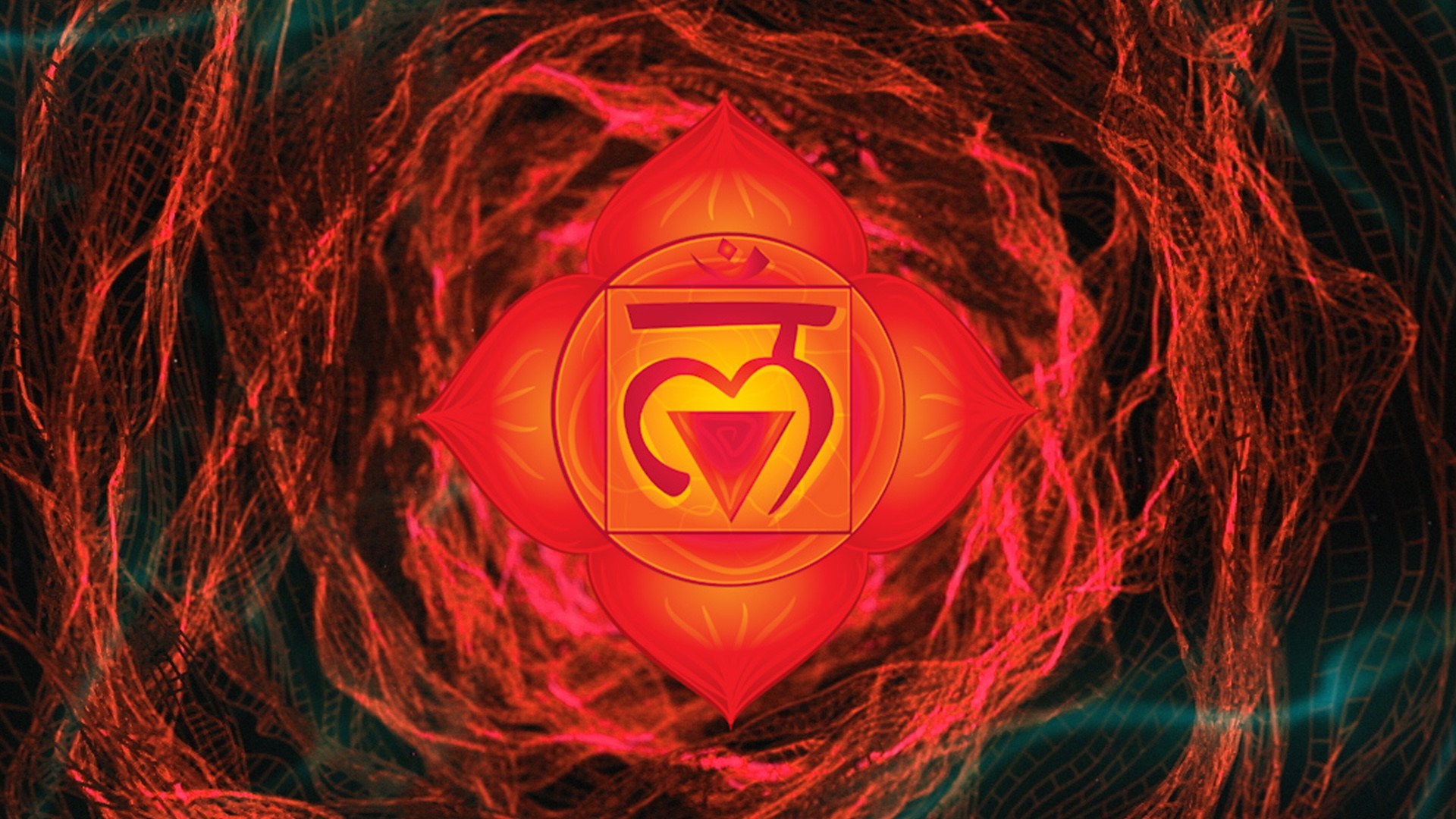
A root-chakra practice can be a way to reflect on steadiness, belonging and everyday support. Start with a question you can use: what would help you feel more supported in the situation you are actually facing?
In contemporary chakra practice, the root chakra, also called Muladhara or the first chakra, is associated with the base of the spine and themes of security and connection. Some people picture red light, roots or a mountain. You can use those images as personal symbols without treating them as a test of your body or circumstances.
What does “improving” the root chakra mean to you?
Give the idea a concrete meaning before choosing an exercise. Perhaps you want a pause between tasks, a more manageable evening routine or a way to name a need you have been putting aside. A useful practice should leave room for that real need.
Feeling anxious, burnt out or unsettled does not establish a blocked chakra. A meditation cannot verify that you are safe, provide housing or food, or explain a physical symptom. If the difficulty is urgent or practical, give the practical response priority. Seeking help is compatible with a spiritual interest.
A symbolic intention
“I want to explore what being rooted means to me.” You may picture roots or choose a word that has personal meaning.
An everyday need
“I need a plan for tomorrow’s first task.” You can write that plan directly, whether or not you use a chakra image.
1. Choose a comfortable way to begin
You can sit in a supportive chair, rest where comfortable or remain standing if that suits you. There is no need to sit cross-legged, stretch a painful area or hold a yoga pose. Keep your usual mobility support, footwear and other accommodations.
Keep your eyes open if you prefer. Notice something ordinary in the space: the edge of a table, a colour on the wall or the support of the chair. You may rest a hand on a comfortable surface instead of focusing on your spine, feet or breathing. Choose what feels manageable and skip anything that does not.
No special purchase is needed. Crystals, incense, essential oils, candles, a prescribed food or a particular musical note are optional associations in some practices, not requirements for belonging or security. A plain object or a quiet room can be enough for a personal pause.
2. Use a root image, or an ordinary anchor
If imagery appeals to you, picture a tree resting in the earth or a mountain with a broad base. Let the image represent support rather than a promise that nothing difficult can happen. You do not need to see it vividly, sense energy moving or make your body feel different.
If visualising is unhelpful, look at an object near you and describe one detail: its shape, colour or position. You can also use a short word such as “here” or “pause.” Leave your breathing natural rather than forcing deep breaths or holding them.
Outdoors is another option, where accessible and safe for you. You can notice a tree from a bench or window; walking barefoot or standing with closed eyes is unnecessary. Being outdoors does not prove that an energy centre has opened.
3. Explore three paths without demanding a result
The three-path image offers a way to sort your attention. You can imagine paths, draw three columns or simply read the prompts below. Choose one area to consider instead of trying to become perfectly balanced in all of them.
Body and surroundings
What would make this moment more comfortable or manageable? You might adjust the chair, pause a demanding task or attend to an ordinary need.
Thoughts and tasks
What is asking for attention? Name one task, question or uncertainty. You do not have to replace every difficult thought with a positive one.
Connection and meaning
What matters to you here? Consider a person, place, value or routine you would like to make room for. Belonging does not require a particular sensation.
There is no hidden correct answer. You can write “I do not know yet,” choose a different question or finish. If the exercise increases distress, stop and turn your attention to your surroundings or another activity that suits you.
4. Finish with one step you can actually take
Look around the room and decide whether you want to do anything next. Make the step small enough to describe: write the first task for tomorrow, ask someone for practical help, take a comfortable break or find the right service for a concrete need.
If the issue concerns food, housing, physical safety or health, a symbolic exercise cannot settle it. Contact an appropriate local service, someone you trust or a qualified professional for that need. You do not need to feel spiritually ready before seeking support.
A four-line support note
- Situation: What is happening, in plain words?
- Support: What do I already have, and what is missing?
- Choice: What is one available next step, or who could help me find one?
- Review: Was this pause useful, neutral or uncomfortable? What would I change or skip next time?
This note describes your reflection. It does not measure energy, diagnose a blockage or grade how well you are coping. Leaving a line blank is an acceptable result.
Example: a pause before tomorrow
In this fictional example, Lena feels unsettled by an unfinished work list. She sits with her shoes on, looks at a plant and uses “roots” as a reminder to begin with what is available. She notices that the first task is unclear, writes a question for her colleague and closes the notebook. The question is a practical next step; the exercise has not established that a chakra changed or that tomorrow will go smoothly.
Choose words you can honestly use
An affirmation does not need to claim that all your needs are met or that the universe will provide. Try a statement that leaves room for your circumstances: “I can name what I need,” “I can take one step at a time,” or “I am allowed to ask for help.” Change the words or leave them out if they feel false or uncomfortable.
You do not have to repeat a phrase until you believe it or continue until you feel calm. A neutral observation, such as “I am sitting in this room,” can be more useful than insisting on a feeling you do not have.
Keep symbolic associations flexible
Colour, sound and astrological correspondences vary between contemporary approaches. They can be prompts to explore, rather than instructions every person must follow. If you also enjoy astrology, the separate Capricorn guide uses the sign’s symbolism to start practical conversations; it does not establish anyone’s character or chakra condition.
If you use a pendulum alongside chakra imagery, the guide to chakra balancing using a pendulum explains how to separate a movement, your interpretation and your next choice. A movement cannot confirm that this practice worked.
Know when to change the approach
NCCIH’s overview of meditation and mindfulness describes limitations in the evidence and reports that some people experience unwanted effects. Its findings concern varied meditation practices, not a validated root-chakra treatment. Do not use this exercise to replace care or delay getting help for a health concern.
If inward attention feels unpleasant, choose an external object, an ordinary task or no exercise at all. Persistent distress, panic or physical symptoms deserve appropriate attention on their own terms. Buying a clearing or achieving a particular visualisation is not a prerequisite for help.
Frequently asked questions
1. Does feeling anxious mean my root chakra is blocked?
No. Anxiety or feeling unsettled does not diagnose a chakra blockage. Consider your circumstances and seek appropriate support for persistent distress or health concerns.
2. Do I have to sit on the floor or go barefoot?
No. Use a comfortable position, keep footwear and mobility support, and leave your eyes open if you prefer. You can practise indoors, in a chair or without body-focused attention.
3. What if I cannot picture roots or red light?
Use an ordinary object, a written prompt or a simple word instead. Vivid imagery and a particular sensation are not required for a personal reflection.
4. How do I know whether the practice was useful?
Ask whether it helped you notice a need or choose a practical next step. It may also feel neutral or uncomfortable. Those observations do not measure a chakra or promise a health result.
5. Must I keep practising until I feel secure?
No. You can stop at any point. A concrete safety, housing, food or health concern needs an appropriate practical response; you do not have to finish a meditation before asking for help.
Good explanation on how to start with physical stretches to aid the meditation.
Including a section on affirmations to use after meditation is very useful.
This article provides a thorough explanation of the root chakra and how to realign it through meditation.
I appreciate how the article mentions the physical manifestations of a blocked root chakra.
Yes, understanding the physical impacts makes it easier to recognize the issue.
The visualization exercises seem very effective for achieving balance.
The guide for returning to the present moment was clear and helpful.
I agree, the imagery of three paths is particularly engaging.
I found the guided meditation section particularly helpful for understanding how to focus on the root chakra.
The inclusion of color associations and astrological signs adds a nice touch to the description of the root chakra.
The part about envisioning yourself as a tree or mountain was quite vivid and easy to follow.