


Channeling is a word people use for receiving impressions they understand as coming from a guide, spirit or another source of wisdom beyond their everyday thoughts. For some, it belongs to prayer or a quiet spiritual practice; others describe images, spoken impressions or reflective writing.
You can explore that language without surrendering control of your body or judgment. A useful starting point is one honest question and a short pause, with permission to find nothing particular and return to your day.
What channeling can mean
Methods and beliefs vary. One person may picture a compassionate guide; another may notice a phrase or a symbolic scene. Some practitioners describe a trance, while others remain fully conversational. There is no requirement to pursue hypnosis, lose awareness or allow another person to override your choices.
Whether an impression has a spiritual source is a different question from whether it feels moving or useful. A vivid experience can matter personally without establishing its cause. Popular near-death or trance accounts are individual reports, not automatic verification of every claim made about guides.
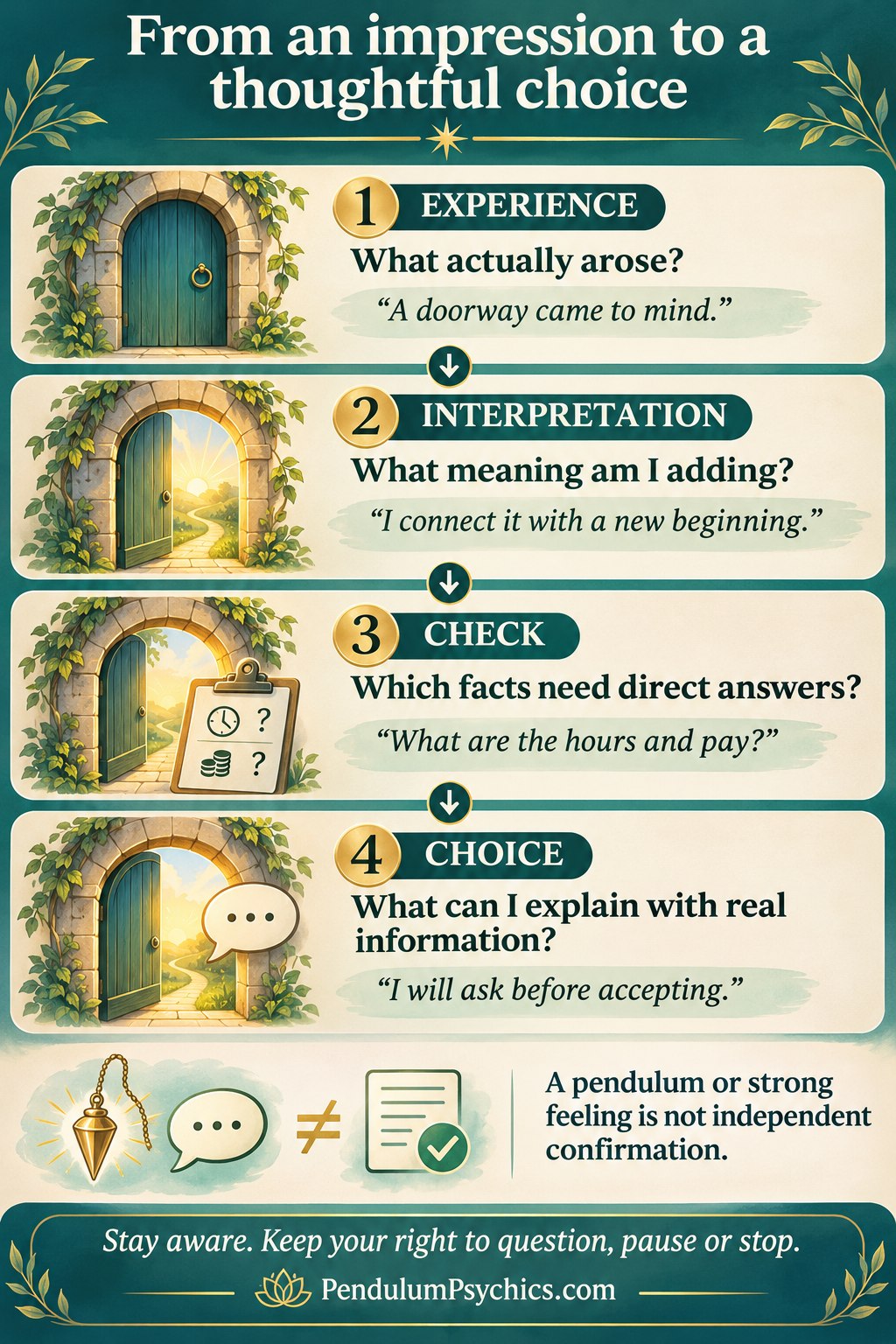
An experience
“A doorway came to mind while I was considering a move.”
Describe what you noticed before adding an explanation.
An interpretation
“I connect that doorway with a new beginning.”
Name the meaning as your interpretation, leaving room for another one.
A checkable claim
“The new job has flexible hours.”
Ask the employer and read the terms. A comforting impression does not establish that fact.
A chosen response
“I will list the questions I need answered before accepting.”
Choose an action that fits your values and the information available.

Try a brief spirit-guide reflection
- Settle somewhere familiar. Keep your eyes open if you prefer and choose a short end point.
- Use language that fits your beliefs. You might picture a wise presence or offer a simple prayer. You do not need a name, face or vivid image.
- Begin with appreciation. Think of something or someone that has supported you. This is an invitation to gratitude, not proof that a guide has arrived.
- Ask an open question. Try “What quality would help me handle this conversation?” or “What am I overlooking in my preparation?”
- Notice without chasing. Record a phrase, memory, image or the absence of an impression. Avoid stretching one detail into a certainty.
- Close and check. Return attention to the room, review what you wrote and choose one ordinary next step.
“Should I take this job?” can hide several practical questions. Separate pay, hours, responsibilities and your own needs. An impression may prompt reflection, but direct information helps you decide. Our guide to wording pendulum questions also explores the value of asking one clear thing at a time.
Do not turn body sensations into yes-or-no rules
Warmth, chills or heaviness can have many contexts. They do not form a universal code in which a warm chest means approval or discomfort means a guide is warning you. Ringing ears, pain or other unfamiliar symptoms deserve appropriate attention, not repeated exercises to make them stronger.
A pendulum is not an independent confirmation of a channeling impression. Research on pendulum responses describes the ideomotor effect: thoughts and expectations can contribute to small movements that swing it. If you include a pendulum in your practice, keep its movement separate from evidence about a guide or an external event.
Free guidance-discernment worksheet
Use this before acting on an impression. Copy the prompts into a private phone note.
- My question: what was I hoping to understand?
- What arose: the exact image, words or feeling before interpretation.
- My association: what meaning am I adding?
- My context: what did I already know, want or fear?
- What can be checked: facts I need from a person, document or appropriate professional.
- My choice: a small action I can explain without relying only on the impression.
- My boundary: what would make me stop, wait or ask for help?
Example: “I pictured a bridge while considering reconciliation. I associate it with conversation. I still need to consider the person’s behavior, my boundaries and whether contact is safe. I can talk with a trusted person before deciding.”
When to pause
A spiritual practice should leave room for rest, doubt and ordinary relationships. If you are repeatedly asking for a sign until you feel reassured, set the exercise aside. You do not need to prove loyalty to a guide by neglecting sleep, spending money or following a frightening instruction.
NCCIH notes that meditation can involve negative experiences for some people. Shorten or stop a practice that becomes distressing. If you hear unexplained voices, experience unfamiliar sensory changes or feel unable to manage daily life, seek appropriate medical support; these are not evidence that you must advance your channeling.
Keep guidance compatible with freedom
Be cautious of a reader who insists only they can interpret your guide, predicts disaster if you leave or sells urgent clearing to make you safe. Clear fees, confidentiality and permission to disagree matter more than a dramatic account of spiritual authority.
Our article on psychic and empath boundaries offers a related starting point. Whatever language you use for guidance, it should not require abandoning your right to question, decline or seek direct help.
Frequently asked questions
1. What does channeling spirit guides mean?
People use the phrase for impressions they interpret as coming from a guide or spiritual source. Methods and beliefs vary, and the impression does not establish its source.
2. Do I have to lose control to channel?
No. You can explore a brief reflective practice while remaining aware and in charge of your choices.
3. Is hypnosis required?
No. Hypnosis and trance are not requirements for a short spiritual reflection, and you do not need to pursue an altered state.
4. Must I see a guide’s face?
No. A prayer, a quiet intention or no particular image can be enough for your chosen practice.
5. What is a useful first question?
Ask an open question about a quality, value or preparation you can explore, rather than demanding a guaranteed decision or forecast.
6. Does warmth always mean yes?
No. Body sensations do not provide a universal yes-or-no code and may have many ordinary contexts.
7. Does ringing in my ears show a guide is near?
It does not establish a spiritual presence. Unfamiliar or persistent symptoms deserve appropriate attention.
8. Can a pendulum confirm a channeled message?
Its movement is not independent evidence of a guide or external fact. Small muscle movements and expectations can contribute to the swing.
9. What if nothing happens?
You can end the exercise without forcing an impression. The absence of a message is not proof that support has been withdrawn.
10. How can I record an impression fairly?
Write its original wording, your interpretation, what you already knew or hoped, other explanations and any facts that need direct checking.
11. Does a vivid story prove contact?
A moving account is not automatic verification of its claimed source. Personal significance and evidence are different questions.
12. Should I repeat a question until I feel sure?
Repeated checking can create pressure. Pause, consider direct information and ask for ordinary support instead of requiring another sign.
13. Can a guide decide my relationship for me?
An impression or a reader’s statement does not remove your choice. Consider behavior, consent, boundaries and safety directly.
14. When should I stop the practice?
Stop if it becomes distressing, frightening, compulsive or disruptive to rest and daily life. Seek appropriate support when needed.
15. What is in the free worksheet?
It separates your question, experience, interpretation, context, checkable facts, chosen action and boundary before you act.
I appreciate the explanation of how mediums work and the potential benefits for those seeking guidance. It’s always good to approach such topics with an open mind.
The article addresses both the believers and skeptics of psychic abilities well. It provides a good overview without leaning too heavily on either side.
The conclusion really resonated with me. It’s true that the only way to know if it’s real or not is to experience it for oneself.
It’s important to remember that there have been frauds in this field, as the article mentions. Always approach with caution and do your research.
I think the discussion around the lack of scientific evidence is important. It highlights the need for both belief and skepticism in such matters.
The article presents a balanced view on the topic of channeling and mediums. It’s interesting to learn about the historical context and different perspectives.
I find it intriguing how mediums are described to receive information through symbols, images, or even songs. It adds a layer of mystique to their abilities.
The part about psychics helping in solving murders was quite surprising. It’s fascinating how some people believe in this kind of guidance.