

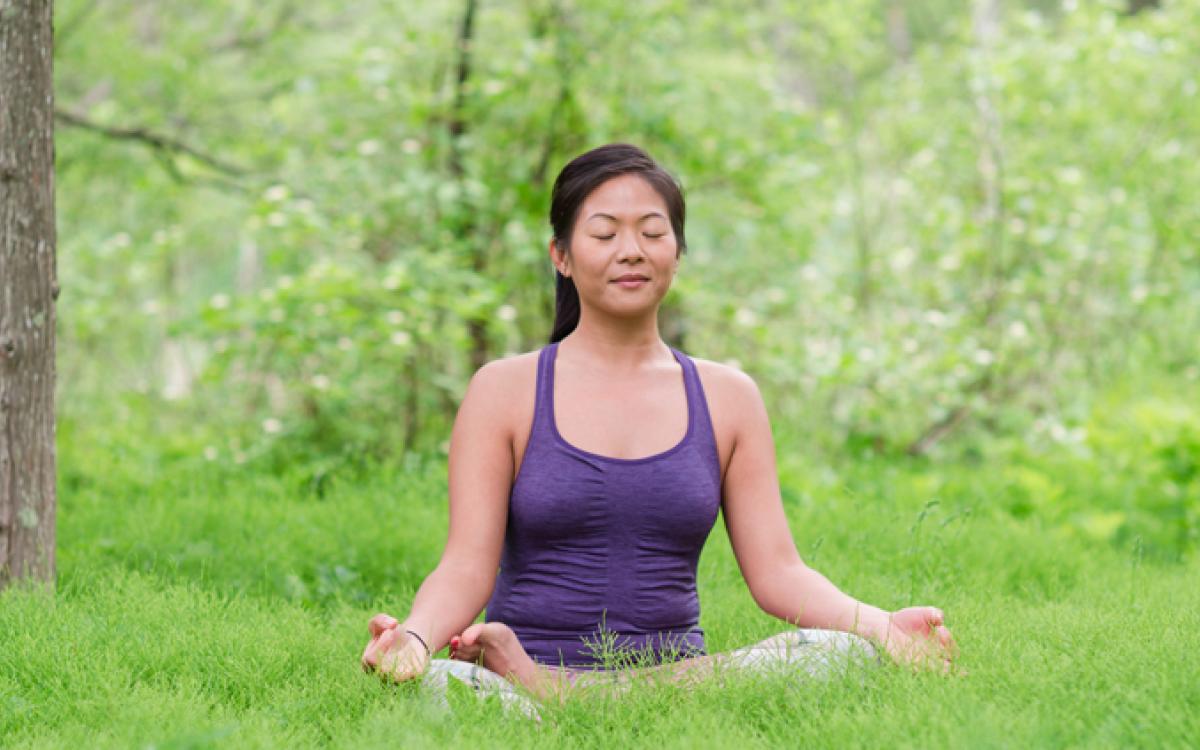
You do not have to feel a rush of energy to explore prana. A quieter moment can be enough: after closing your laptop for the day, take your hands off the keyboard, feel your feet on the floor and let your next breath arrive at its usual pace. In yoga, that moment can be part of a spiritual practice as well as an ordinary pause.
Prana and the breath
In yogic traditions, prana refers to vital energy or life breath. Pranayama refers to practices that work with the breath. India’s Common Yoga Protocol places pranayama within a larger yoga tradition. Some readers also draw a parallel with qi in Chinese traditions. Each term belongs to its own tradition, and neither is another name for an electromagnetic field measured in the body.
Many yoga teachings describe five main vayus, or currents. The Sanskrit names below are a vocabulary for the tradition. You can read them without trying to detect or diagnose a current in your body.
- Prana vayu
- Taking in; often associated with the breath.
- Apana vayu
- Downward movement and letting go.
- Samana vayu
- Drawing inward and assimilation.
- Udana vayu
- Upward movement and expression.
- Vyana vayu
- Spreading outward and circulation.
Try a pause between two activities
- Sit somewhere comfortable or stand with your feet supported. Leave your breath as it is for the first few moments.
- Let the next few breaths be smooth and easy. There is no target count or breath hold. If you do not like directing your breath, notice the support of the seat instead.
- When you are ready, decide how you want to begin your next activity. After work, you might get a glass of water and set your phone aside before joining the people at home.
Stop if the practice feels uncomfortable. The NHS breathing guide also describes breathing comfortably without forcing it. The NIH’s yoga safety overview advises beginners to avoid forceful breathing. An unusual or persistent symptom deserves appropriate care rather than an interpretation about prana.
Bring the practice into an ordinary day
Attach the pause to something you already do: setting down your keys, opening the curtains or putting on the kettle. On a rushed morning, you can skip a breathing routine and simply choose an intention for the next interaction. If chanting, prayer or an image of light is meaningful to you, you can include it without needing to feel anything special.
You can also bring the same attention to how you receive help, share a laugh or keep a promise you can manage. These are choices you can notice without ranking your food or other people by “vibration.” If your interest is in kindness as a spiritual practice, try the guide to using the heart chakra as a focus for care. If you are winding down after a difficult interaction, the emotional decompression guide offers other ways to make that transition.
This article provides a great overview of prana and its importance.
Agreed. It’s very informative.
Yes, especially the part about diaphragmic breathing.
It was nice to see laughter mentioned as a way to boost prana.
Laughter really does have so many benefits.
Absolutely, it’s great for both physical and mental health.
I appreciated the emphasis on consistency and compassion in improving prana flow.
The explanation on how prana isn’t just the air we breathe was enlightening.
I found the comparison to a bioelectromagnetic field very interesting.
The section on ways to amplify prana was helpful.
I agree, meditation and breathing techniques are key.
The idea of acting lovingly and living boldly resonated with me.
It’s inspiring to think about living life to its fullest potential.
Yes, embracing self-worth is crucial for happiness.
I like how it links prana to our daily lives.
Yes, especially the tips on high vibration foods and affirmations.
It’s practical advice for improving wellbeing.