


A pendulum ritual can be a small pause for attention and reflection. The useful question is what you notice and do afterward. A clear swing does not establish that a prediction is true or that someone else has sent a message.
The five approaches below suit different situations. Choose one that feels comfortable, adapt it or leave it out. You do not need a paid retreat, a special crystal or a daily streak to take part.
Set up for comfort before choosing a ritual
Use a securely attached small weight on a chain or cord. Leave clear space underneath it, keep loose clothing out of the way and check that nothing is catching the cord. Rest your arm if that feels better. Stop if your hand, arm or eyes become uncomfortable.
Decide in advance whether you are simply watching the movement or assigning labels such as yes, no and unclear. The site’s pendulum setup guide explains response conventions. Learning to recognise a movement is different from demonstrating that it detects unknown information.
Why a movement can feel spontaneous
A handheld pendulum can amplify small movements that you do not experience as a deliberate push. In a controlled study of pendulum responses, participants answered a visual letter-detection task using speech or a pendulum. The results did not show more accurate answers with the pendulum. That laboratory task does not establish what a ritual means personally; it also does not verify predictions.
1. A quiet personal check-in
Choose an ordinary moment when you have a little space to yourself. Write one thing that is on your mind, such as wanting a quieter evening or needing to finish a small task. Notice what you already prefer before picking up the pendulum.
If you enjoy watching it swing, let that be part of the pause. You can also put it down and write instead. The aim is to recognise a feeling or a manageable next action; a particular direction does not decide what you must do.
A short stopping point can help keep the exercise bounded. For example, choose five minutes for this attempt. That is a practical limit you can change, not a required duration or a way to certify an answer.
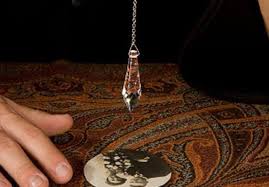
2. Preparation for a reading or reflective conversation
Before a conversation, jot down what you want to discuss and which details you can check directly. You might want to understand your own hesitation about a hobby or organise questions about a change in routine.
If you use a pendulum while preparing, record the movement separately from the question. It cannot authenticate what a reader says or establish that advice will work. During the conversation, prioritise listening, asking for clarification and keeping your own notes. You can put the object away if it distracts you.
For questions that need a factual answer, make a separate task: ask the relevant person, check the document or obtain appropriate advice. The question-wording guide helps distinguish a reflective prompt from a question that belongs elsewhere.
Agree on the type of psychic reading and the communication method before a session. A tool name and phone or chat delivery describe different parts of the experience.
3. A two-person observation exercise
Agree on the purpose before beginning. One person can hold the pendulum while the other records the wording and visible movement. Swap roles only if both people want to. Neither person needs to accept the other’s spiritual interpretation.
Try a harmless prompt such as noticing which of two familiar stories you feel like reading. Compare your own reactions afterward. Do not use a movement to announce someone’s hidden feelings, make an accusation or override their stated choice. Either person can end the exercise without an explanation from the pendulum.
An example: observation and choice stay separate
Imagine Dani holds the pendulum while Robin writes down a small clockwise circle. Their prompt is which of two familiar stories Dani feels like reading. Dani then says, “I want the mystery.” Robin prefers the comedy.
The note records the movement and both stated preferences. It does not turn a circle into agreement or evidence of a shared energy. They can choose separate books or talk about a third option. Their next step comes from that conversation.
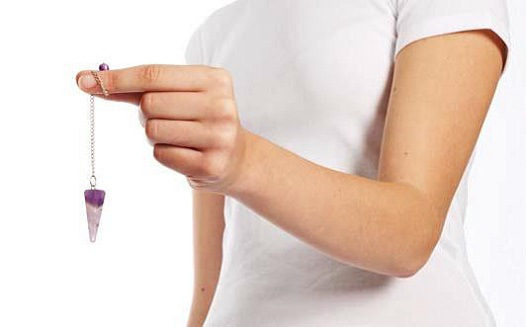
4. A pause in a different setting
You may prefer a quiet corner at home, a sheltered place outdoors or a familiar room with fewer interruptions. A change of setting can simply help you notice what feels distracting. There is no need to book a hotel or travel for a stronger result.
Outside, wind can move a suspended object. Indoors, check fans, table movement and contact with your sleeve. If conditions make the swing hard to describe, write that down rather than interpreting it as a message. An ordinary walk, a seated pause or a page of writing can serve the same reflective purpose without the object.
5. A supported practice with a clear ending
If you want to compare movement, keep the viewing direction and comfortable hold point similar. Supporting your elbow may reduce strain, but it does not remove all human influence. A fixed support changes the physical setup; it does not make the pendulum a verified detector.
Avoid hanging a weight where someone could walk into it. You do not need to mount it in a doorway or extend a session because your arm has tired. Fatigue is a reason to rest. End when you have recorded the observation or when continuing no longer feels useful.
What you can record
The question, your setup, the movement you saw, your reaction and an ordinary next step.
What the record cannot establish
That a spirit caused the movement, that another person’s private thoughts were revealed or that a future outcome is guaranteed.
A simple note to use afterward
- Observation: What moved, and under what conditions?
- Reaction: What did I hope for or feel when I saw it?
- Next step: What small action makes sense independently of the swing?
You can write “unclear” or “this did not help.” Neither result requires another session.
Keep the practice within its purpose
If a question concerns symptoms or treatment, use appropriate health care rather than a ritual response. NCCIH’s guidance on complementary approaches explains why unproven practices should not replace or delay established care.
Keep a ritual only if it leaves room for ordinary judgment and your own choices. You can enjoy symbolic meaning without making every daily decision depend on an answer.
Frequently asked questions
1. Do I need to practise every day?
No. Choose an occasional practice only if it is useful to you. A missed day does not weaken a spiritual connection or require you to start again.
2. Does a steady swing mean the answer is accurate?
No. Recognising a repeated movement is different from showing that an answer matches independent facts.
3. Can another person decide when I am allowed to stop?
Your participation is your choice. Agree on the purpose before a shared exercise, and stop whenever you want.
4. Should I mount the pendulum when my arm gets tired?
Rest instead. Changing to a fixed support changes the setup and does not make the result a verified answer.
The article does a good job explaining how to establish the motion of the pendulum and why it’s important.
Mounting the pendulum could help with longer readings but it’s good to know fatigue can affect the results.
This article provides practical advice on using pendulums for divination rituals. It seems important to practice regularly for better results.
The suggestion to focus on the pendulum to improve concentration during phone readings is quite intriguing.
Keeping a journal to track the pendulum’s accuracy and other details like the Moon’s phase sounds like a useful method.
It’s interesting that the article mentions how our own strong feelings can influence the pendulum’s readings.
Performing readings at the same time and place daily to gain consistent results seems like a disciplined approach.
The idea of using a pendulum during a vacation for psychic sensitivity is interesting. I might try it next time I’m away.