


Before a pendulum reading, decide what you want to leave with: a clearer question, two options you can compare, or a practical next step. A pendulum can be part of a personal ritual or a prompt for reflection. Its swing cannot establish facts about health, money, safety or another person’s thoughts.
Make a short plan before you start
Choose one topic and a comfortable place to sit. Decide how much time you want to spend, what you will write down and when you will stop. You can end the session with an unanswered question.
1. Name the decision
Write the choice in one sentence. If you cannot name the options yet, use the time to list them instead of asking for a yes or no.
2. Separate facts from preferences
Put dates, costs and promises you can verify in one list. Put your feelings and priorities in another. Both matter, and they call for different kinds of follow-up.
3. Decide what to record
Note the question, the movement you saw and what you felt about it. Keep those observations separate from any interpretation.
4. Choose a stopping point
Choose a time or one pass through the question. If you feel the urge to keep asking until you get a preferred result, put the pendulum down and return to your notes.
Get comfortable without chasing the right feeling
Rest your arm on a stable surface and let the weight hang freely. If you like to take a quiet moment, breathe at a comfortable pace or use a familiar ritual. You do not need to clear every thought or feel neutral before you begin. You can also choose to wait if you want more time.
Movement at the support and the way the weight is held can change what you see. The mechanics of a simple pendulum help explain the physical motion. A study using a brief visual letter task examined pendulum responses in that limited setting. It does not establish that a swing can answer personal questions or predict an outcome. For the physical setup, see how to use a pendulum.
Turn a broad question into a useful prompt
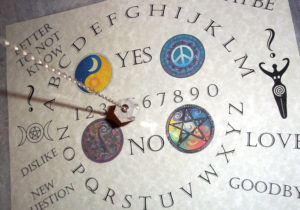
“Should I go to Mary’s party?” mixes several questions. First check the date, location and how you would get home. Then ask yourself what you want from the evening. “Would I enjoy stopping by for half an hour on Saturday?” gives you a concrete option to consider. You can RSVP after you check the invitation and decide what works for you.
When the question is about somebody else’s wishes, ask them directly if you can do so safely. When the answer depends on a fact you can check, use a calendar, a document, a conversation or another appropriate source. If the movement seems inconsistent, use this guide to checking an unclear pendulum answer before drawing a conclusion.
Copy this preparation note
- My question: What one choice am I considering?
- What I know: Which facts have I checked?
- What I still need: Which answer requires a conversation or other evidence?
- My stopping point: When will I put the pendulum down?
- My next action: What can I do or check after the session?
Afterward, add a sentence about what you observed. “No clear movement” is a usable note. It means you can leave the question open and take the next action you wrote down.
Prepare for a session with someone else
Tell the reader what kind of reflection you want and what subjects are off limits. You can keep names, contact details and sensitive information private. If the session is paid, ask what is included, the time allowed, the total fee or per-minute rate, and the currency. Decide the most you are willing to spend before the session starts.
At the end, ask yourself whether you have a clearer question or a small action you can take. That is something you can assess without treating a swing as proof.
Questions about preparing for a pendulum reading
1. Do I need to cleanse my pendulum before a reading?
If a cleansing ritual has personal meaning, you can include it. It is optional. Preparing your question and deciding what evidence you need are more useful than trying to make the swing reliable.
2. What should I write down before I start?
Write one question, the facts you already know, the facts you still need and one action you can take afterward. Put the question in your own words so you can tell whether the session helped you think.
3. Can I use a yes-or-no question?
Yes, if it helps you compare two specific options. A yes or no swing does not tell you which option is safe or true. Write down why each option appeals to you and what you can check before deciding.
4. What if the pendulum changes direction or stays still?
Record what you actually observed, including no clear movement. Rest your hand or end the session. You can leave the question open and check it another way.
5. What should I ask a reader before a paid session?
Ask what the session includes, how much time you have, the total fee or rate per minute, and the currency. Agree on a spending limit and ask how to end the session before sharing personal information.
6. Can preparation make a pendulum answer an important question reliably?
Preparation can make your notes and choices clearer. It does not establish a reliable answer about health, money, safety, consent or another person’s thoughts. Use the evidence or qualified help that fits the decision.
The suggestion to ask for a stronger response if needed is helpful. It’s a simple yet effective tip.
This article provides a thorough guide on preparing for a pendulum session. It covers several important aspects.
The emphasis on being specific with questions is a good reminder. It really does make a difference in the quality of the answers.
Using phrases that the higher self can relate to makes sense. It’s a good way to ensure clarity in responses.
Agreed. Clear and well-phrased questions are crucial for getting reliable answers.
Absolutely. Language and specificity are very important in these practices.
The advice to not multitask during a pendulum session is useful. Focus is key in any meditative practice.
The note about avoiding emotionally charged questions resonates with me. It’s hard to stay objective when emotions are involved.
I like the idea of visualizing a happy place to set the tone for the session. It sounds like a great way to relax.
The tips on cleansing energy and grounding yourself seem very practical. I’ll try visualizing tree roots next time.